Introduction
In the volatile landscape of South Asia, the India-Pakistan relationship remains one of the most complex geopolitical equations in the world. With history rooted in partition, three full-scale wars, and numerous border skirmishes, the two nuclear-armed neighbors continue to grapple with territorial disputes, particularly over Jammu & Kashmir. Amid this backdrop, India has conducted several covert and strategic operations to defend its sovereignty and combat terrorism — one such mission often discussed in public and media circles is the hypothetical “Operation Sindoori.”
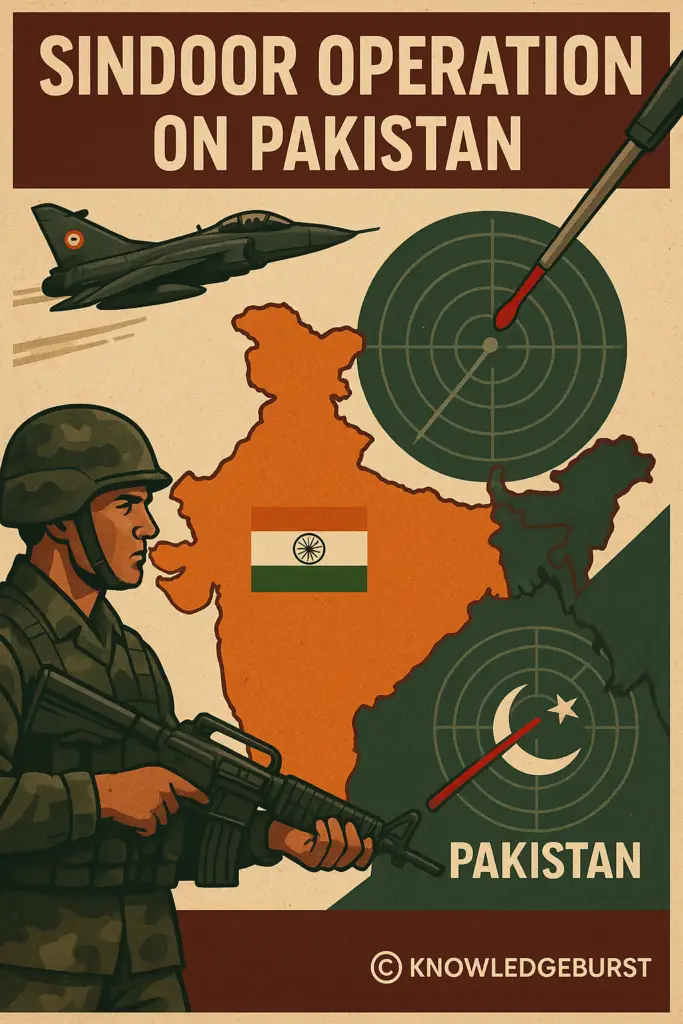
While not officially confirmed, the term “Operation Sindoori” symbolizes India’s aggressive posture against terrorism, especially post-Uri and Pulwama attacks. This blog explores the essence of such strategic missions, the logic behind them, and how they shape regional dynamics.
Understanding the Context: Terrorism and India’s Response
India has long suffered from cross-border terrorism, with groups like Jaish-e-Mohammed, Lashkar-e-Taiba, and others operating from Pakistan-occupied territories. In response to high-casualty attacks on Indian soil, the Indian government has, over the years, authorized surgical strikes and airstrikes as part of its counter-terrorism doctrine.
Key examples include:
- 2016 Surgical Strikes (post-Uri attack)
- 2019 Balakot Airstrike (post-Pulwama attack)
These operations marked a strategic shift — India’s transition from reactive diplomacy to proactive defense.
What Is “Operation Sindoori”?
Although there is no formal documentation of a mission named “Operation Sindoori”, the term is often used symbolically in defense commentary and social discourse. It evokes the image of:
- A decisive Indian military operation
- Targeting terror launchpads across the Line of Control (LoC)
- Ensuring zero tolerance for cross-border attacks
- Demonstrating India’s readiness to act preemptively and precisely
Some defense experts speculate that Sindoori (meaning “saffron-red” in Hindi) reflects the courage, sacrifice, and blood of Indian soldiers, metaphorically linked to the sindoor worn by Indian women — a symbol of hope, marriage, and martyrdom.
The Strategic Purpose Behind Such Operations
Operations like these aim to achieve:
1. Tactical Deterrence
To send a strong message to Pakistan-based terror outfits that India will not stay silent.
2. Domestic Assurance
To show the Indian public and political stakeholders that national security is a top priority.
3. Global Signaling
To reinforce India’s position in international forums as a responsible but firm sovereign power.
Challenges in Executing Covert Operations
Executing a strategic operation like “Sindoori” involves:
- Intelligence coordination across RAW, IB, and Military Intelligence.
- High-risk surgical strikes in hostile territory.
- Diplomatic fallouts and risk of escalation.
- Managing international pressure, especially from the UN, China, and the US.
The Human Angle: Valor and Sacrifice
Behind every operation are soldiers in camouflage, strategists in war rooms, and families praying at home. “Operation Sindoori,” though unofficial in name, represents the spirit of India’s armed forces—brave, calculated, and selfless.
Looking Ahead: Peace Through Strength
India has always upheld the doctrine of “Shanti ke liye shakti” (Strength for Peace). Strategic operations are not warmongering—they are calculated responses to persistent threats. While diplomacy remains the preferred path, India has shown it will not hesitate to cross boundaries if national security is at stake.
Conclusion
“Operation Sindoori,” whether real or symbolic, encapsulates India’s unwavering commitment to protect its citizens, borders, and dignity. It’s a reminder that behind every border is a battalion ready, behind every uniform is a story of courage, and behind every mission is a nation that will never forget the sacrifices made in silence.
JAY Hind